Booth Renter Booking Software: What to Check Before You Pay
By Laz · September 8, 2026

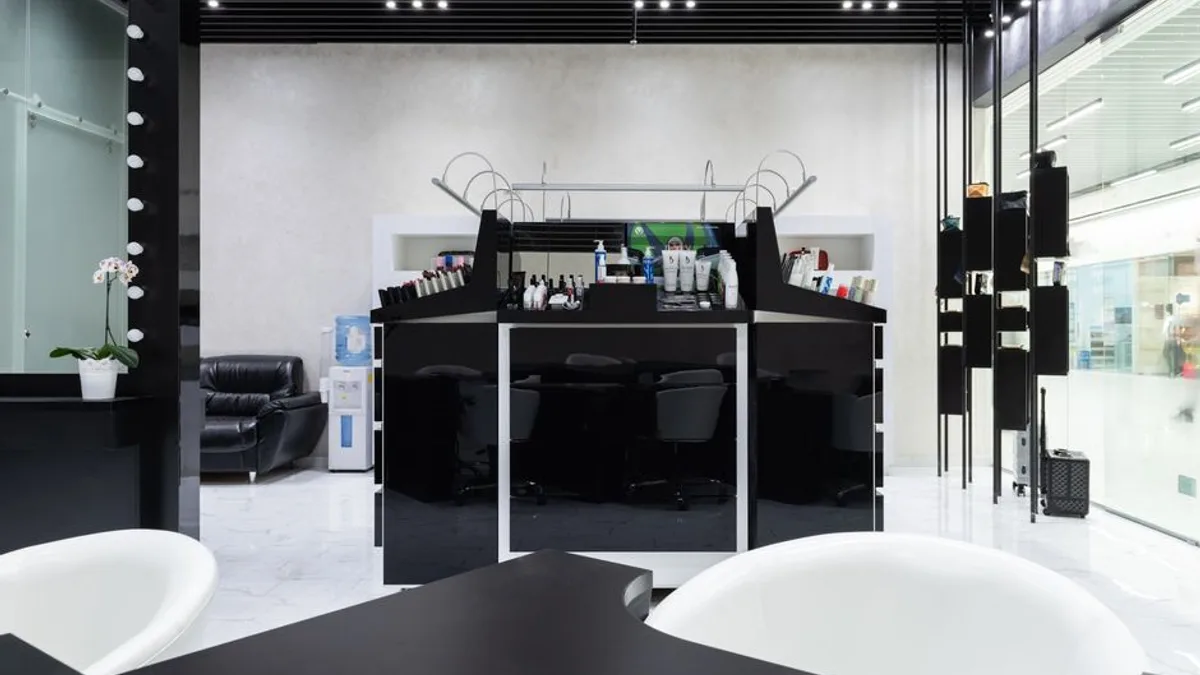
Image by Gadini on Pixabay
If you rent a chair or a suite, you already know standard booking software was never built for you. It was built for salons with a front desk and several stylists. That software assumes someone else manages the calendar, handles the walk-ins, and deals with the chaos. You don't have that luxury. You are the front desk, the marketing team, and the stylist. You book your own clients, set your own hours, and keep 100% of what you earn. The tool you use should treat you like a one-person business, not a small part of a bigger machine.
Most generic systems miss the biggest issue you face: protecting your time. They offer features you don't need and charge you for them. They ignore what actually costs you money, like a 15-minute brow wax destroying your ability to book a 90-minute color service later that day. This article covers why that happens and how to fix it.
What Booth Renters Actually Need from Booking Software
Generic booking software is designed to fill every possible slot on the calendar. For a salon with multiple stylists, that makes sense. If one stylist has a gap, a receptionist can move things around or offer a different service. You can't do that. When you're solo, a fragmented day is a lost day.
A generic system might offer inventory management, commission tracking, and payroll features. You don't need any of that. You need control over your own time blocks. You need to know that when you block out 3 hours for a big color transformation, the system won't let a 15-minute quickie slip into the middle of it.
This is why Chairwarden is intentionally single-calendar software. We built it for one independent booth renter or solo-suite stylist, not multi-provider salons. If you're looking for a tool that understands the solo operator workflow, check out our guide on salon scheduling software and the real workflow behind booking. The short version: your calendar is your business, and the software should respect that.
The Hidden Risk: Short Appointments That Destroy Your Long Service Blocks
Here is a scenario that plays out every day. You offer a 90-minute color service and a 15-minute brow wax. Standard booking software treats these as separate slots. It doesn't care that a short booking at the wrong time fragments your day.
Fragmentation means you get a 15-minute gap between two long services. That gap is too short to start another service, too long to just sit there, and you don't get paid for it. You're stuck in the suite, waiting, earning nothing. If this happens a few times a week, you're losing real money. We wrote about this specific issue in a piece on the Swiss cheese calendar problem and why booth renters lose $1,000 a month.
Chairwarden solves this with calendar protection. During setup, you enter roughly how long a quick service and a long service take. The system then hides booking slots that would allow a short service to break up a higher-value block. Most generic booking tools ignore this. They focus on filling every slot, not on protecting your highest-value time. If you're evaluating options, our comparison of salon tools that actually protect your calendar might help you see the difference.
Strict Mode vs. Relaxed Mode: Two Ways to Protect Your Calendar
Not every booth renter runs their books the same way. Some want absolute control. Others are more flexible. That's why Chairwarden doesn't force a single approach. We offer two distinct protection modes.
Strict mode never allows fragmentation. A short service cannot be booked in the middle of a long block, even if there is a visible gap. If you have a 45-minute gap between two color services, strict mode will not let a 15-minute wax fill it. The system knows that filling that gap ruins your flow and eats into your setup or break time.
Relaxed mode allows a short service only at the edges of a block, when it won't meaningfully fragment the long service. This gives you more flexibility without ruining your day. You might allow a 15-minute service at the very start of the morning or right before a long block ends, but never in the middle.
Which mode you choose depends on your service menu. If you do mostly long services and hate gaps, strict mode is better. If you can handle a short service at the start or end of a block, relaxed mode keeps your calendar fuller without the stress. The point is that you get to decide. The software does not force a one-size-fits-all approach.
What Chairwarden Costs and What You Get for Free
Let's talk numbers, because that's what matters. Chairwarden has a free tier. It covers up to 15 bookings per month, and you don't need a credit card to start. That is enough for a part-time renter or someone just starting out and testing the waters.
The paid plan is flat. It costs $29 per month, or $23 per month if you bill annually. That gets you unlimited bookings. No hidden tiers, no surprise fees when you get busy.
Here is what that price includes that you might not expect:
- The paid plan includes 500 SMS reminders per month. Many booth renters pay extra for reminder automation elsewhere. If you're sending 500 texts a month on another platform at $0.10 each, that's $50 you're spending just on reminders. Chairwarden includes it.
- There are no per-day double-booking fees. Some tools charge you extra if you accidentally overlap a client.
- There are no per-booking fees. You don't get penalized for being popular.
- There is no percentage cut on card payments. Chairwarden doesn't touch your transaction revenue.
This keeps your costs predictable. You know exactly what you're paying every month, regardless of how busy you get. If you're curious about how this stacks up against the broader market, our breakdown of salon booking software costs and what to skip goes into more detail on typical pricing structures.
Red Flags to Look for in Any Booth Renter Booking Software
Before you sign up for any booking tool, run it through this checklist. These are the things that will actually bite you later.
Ask how the software handles overlapping services. If it doesn't prevent double-booking, you will have to manage that yourself. That means checking your calendar manually before you confirm every appointment. That's busywork you don't need.
Check whether reminders are included or cost extra. SMS reminders are not a luxury. They reduce no-shows significantly. If you have to pay $0.10 per text on top of your monthly fee, that adds up fast. A stylist doing 20 appointments a week might send 80 to 100 reminders a month. That's an extra $10 just to make sure people show up.
Look at the pricing structure carefully. Some tools charge a percentage of every card payment, plus a monthly fee. If you're taking $5,000 a month in payments and the software takes 2.5%, that's $125 you're losing before you even count the subscription. That can eat into your income more than you expect. Chairwarden explicitly avoids this. There is no percentage cut on card payments, no per-booking fees, and no per-day double-booking fees.
Make sure the software fits your business model. If you are a solo booth renter, you don't need multi-stylist scheduling with commission tracking and team management. You need a tool that respects your time blocks and doesn't let short services ruin your long service revenue. If you're still weighing your options, our guide to salon suite booking software features and top picks covers what to look for in more depth.
The Bottom Line on Calendar Protection
The core issue isn't whether you can book clients online. It's whether the software understands the value of your time. A 90-minute color service at $150 is worth more than two 15-minute brow waxes at $20 each. The software should know that and protect the bigger revenue block.
Generic tools don't do this. They treat every slot as equally valuable and every booking as equally good. That's wrong for your business. When you're a booth renter, your income depends on how well you use your hours, not how many appointments you can squeeze into a day.
If you're tired of fighting your calendar and watching short appointments eat into your profitable blocks, give Chairwarden a try. The free tier is enough to see if the strict and relaxed modes actually change how you book. No credit card required. Worst case, you spend 10 minutes setting it up and decide it's not for you. Best case, you stop losing money to gaps you can't fill and start protecting your highest-value services.
Frequently Asked Questions
What is booth renter booking software?
It is a scheduling tool built for independent stylists who rent a chair or suite. Unlike salon software, it focuses on one person's calendar, not a team. It lets you book clients, send reminders, and keep your own schedule.
Why do booth renters need booking software?
Because your time is your income. A missed appointment or a double-booking costs you money. Booking software automates reminders and prevents scheduling errors, so you can focus on your clients.
Can I use Chairwarden for a salon with multiple stylists?
No. Chairwarden is intentionally built for one calendar. It is designed for independent booth renters or solo-suite stylists. If you have a front desk and several stylists, you need a different tool.
Does Chairwarden have a free trial?
It has a free tier that includes up to 15 bookings per month with no credit card required. That is not a time-limited trial; it is a permanent free plan. If you need more, the paid plan starts at $23 per month when billed annually.
On Chairwarden
Salon suite software
Written for a suite renter paying rent whether the chair is full or not.
Read the full page