The Swiss Cheese Calendar Problem: Why Booth Renters Are Losing $1,000 a Month
By Laz · August 22, 2026

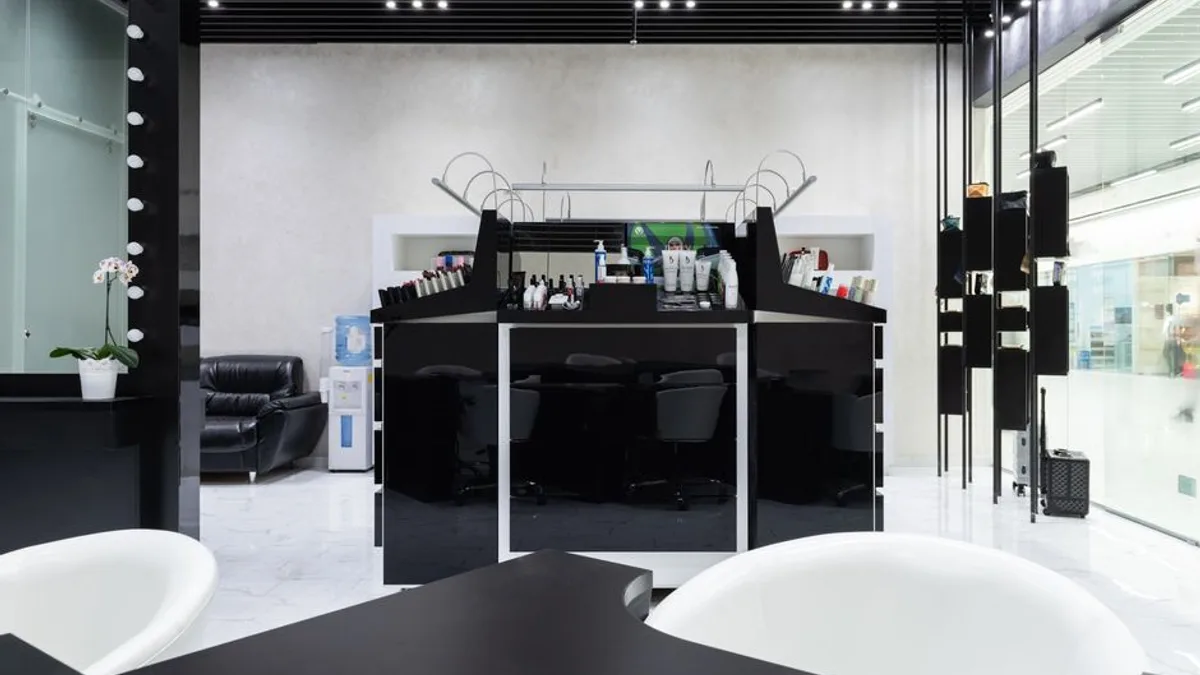
Photo by Mikhail Nilov on Pexels
You block off a four-hour opening for a color appointment. It's the best slot on your calendar, the kind of booking that actually pays your booth rent for the week. Then a 30-minute haircut books itself smack in the middle of it — because your booking page just shows open time and lets anyone grab any slot. Now you have two gaps too short to fill with anything that matters, and the block that was supposed to carry your week is in pieces.
Stylists on r/hairstylist have a name for this: the "Swiss cheese" calendar.
What "Swiss cheese" actually means
The phrase comes from a comment describing exactly this pattern — a calendar that looks full on paper but is riddled with small, useless holes, the same way a block of Swiss cheese looks solid until you notice it's mostly holes. The top-voted reply in that thread put it plainly: it's the one real downside of online booking, and nearly every stylist who's used a public booking page has felt it.
Another comment on the same thread got at why it keeps happening: booking platforms like GlossGenius are passive. They just display open slots and let clients pick whatever they want — even when it wrecks the shape of your day. A human receptionist would never book a 30-minute cut in the middle of a four-hour color block. She'd protect that time, because she can tell the difference between a slot that matters and a slot that doesn't. Software that just shows a grid can't.
The real math behind a "small" scheduling mistake
Here's a rough version of the math, using round numbers so you can swap in your own:
- Say your average high-value block (color, extensions, a full chemical service) is worth $250.
- Say this happens once a week — one short, low-value booking lands inside a block like that and breaks it into two pieces you can't fill.
- Over four weeks, that's roughly $1,000 in appointments that either didn't happen, or happened at a worse price because you had to fill the leftover scraps of time with something smaller.
Your number will be different — it depends on your prices, how often it happens, and how good you are at absorbing the damage. But for a lot of booth renters, "it happens every week or two" is the honest answer, which puts the real cost closer to four figures a month than to "a minor inconvenience."
Why the booking platforms you're already using don't fix this
This isn't a fringe complaint. Even the bigger platforms are starting to notice it — one Reddit comment mentioned Vagaro shipping a "minimize gap" feature after stylists had been asking for it for years. That's a real signal: the market has quietly agreed this is a problem worth solving.
But "minimize gaps" is a patch, not a fix. It still treats every booking as equally important and tries to tidy up the mess after the fact. It doesn't know that your color block is worth four times as much as a cut, or that it deserves to be protected before a booking ever lands — not tidied up after.
What actually prevents it
The fix isn't a smarter gap-filling algorithm. It's telling the system, upfront, which of your services are the ones worth protecting — and then refusing to let anything smaller book into the middle of them in the first place. We wrote a full walkthrough of what that looks like in practice: How to Use Protected Calendar Blocks as a Stylist (Without Losing Clients).
If you're evaluating booking software for exactly this reason, it's worth reading what to actually look for versus what to skip: Salon Booking App: What a Stylist Actually Needs (and What to Skip).
What to do this week, even without new software
You don't need to switch platforms overnight to start closing the holes:
- Turn on manual approval for anything under a set length (30–45 minutes), so short bookings can't land automatically — you approve them, and you can see the collision before it happens.
- Block a visible buffer around your highest-value service types, even if your current tool makes you do it by hand every time.
- Batch your short services into specific windows of the day (first thing, lunch, end of day) instead of leaving them bookable at any hour — this alone prevents most of the "bookended" damage stylists describe.
- Review your week every Sunday for any block that got fragmented, and note what caused it — a pattern usually shows up after two or three weeks.
None of this is exotic. It's what a good in-person receptionist did by instinct, and what most booking pages still don't do by default. If your current calendar can't tell a $250 block from a $30 one, that gap is where the money is quietly leaking — and it adds up faster than it feels like it should.
FAQ
Is the "Swiss cheese" calendar problem specific to one booking platform? No. It shows up on any platform where the booking page treats every open slot the same way, regardless of what's actually booked around it — this has been reported by stylists using several of the major booking tools, not just one.
Can I fix this without switching software? Partially. Manual approval, batching short services into fixed windows, and a weekly review of fragmented blocks will reduce the damage. What manual workarounds can't do is stop it automatically, before a conflicting booking is even confirmed.
How much does this actually cost in a typical month? It depends entirely on your prices and how often it happens. The $1,000/month figure above assumes a $250 block getting fragmented once a week — if it happens less often, or your prices are lower, the number is smaller; if it happens more often, it's larger. The exercise is worth doing with your own numbers.
On Chairwarden
No-show protection
Deposits through your own Stripe account, and what happens when one is not paid.
Read the full page