Booth Rent vs Commission for Stylists: Which Actually Pays More?
By Laz · October 2, 2026

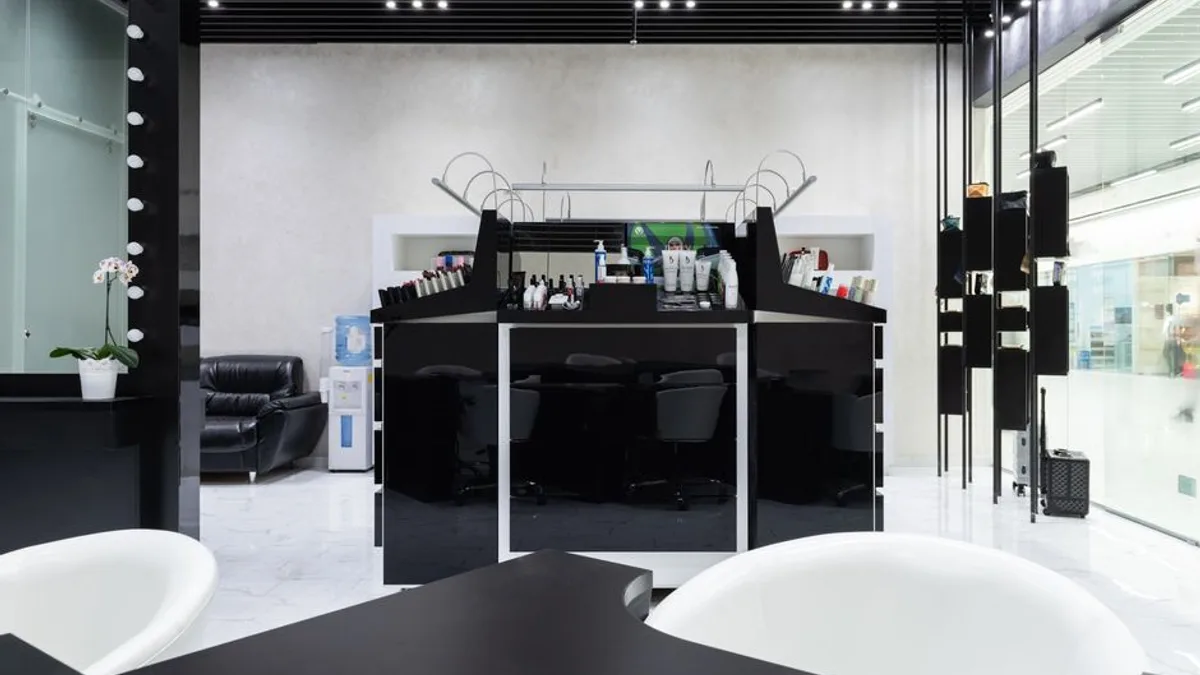
Photo by by Natallia on Pexels
You're staring at two numbers and trying to figure out which one leaves more in your pocket. A 50% commission split, or $300 a week in chair rent.
The answer isn't philosophical. It's arithmetic.
Booth rent usually wins once your weekly service revenue clears about 2 to 2.5 times the rent. Below that line, commission often nets more, because the salon is eating overhead you'd otherwise pay yourself. That's the whole decision in one sentence. Everything else is detail.
Here's how to run the numbers for your chair, not somebody else's.
How the Two Models Work
In a commission salon, you keep 40% to 60% of service revenue. The salon keeps the rest. In exchange, it covers space, utilities, booking software, front desk staff, marketing, products, and insurance. You show up, you cut, you go home.
Booth rent flips that. You pay a fixed weekly or monthly fee and keep 100% of service revenue. Typical rent runs $100 to $500+ per week, or roughly $400 to $2,000+ per month. Market and amenities move that number a lot. Some spaces land between $400 and $1,200 a month. Others, in high-demand areas with a full suite setup, push past $2,000. If you want a market-by-market breakdown, we wrote one here: How Much Does Booth Rent Cost for a Hair Stylist? Real Numbers, By Market.
The part people miss: as a booth renter, you're an independent contractor. That means you own the self-employment tax, 15.3% on top of federal and state income tax. You also carry your own liability insurance and buy your own product inventory.
Commission stylists are employees. Taxes come out of each check. No quarterly estimates, no 15.3% surprise in April.
That difference alone changes the math more than most stylists expect.
The Break-Even Math You Need to Run
Start with the rule of thumb. Booth rent tends to beat commission once your weekly service revenue hits 2 to 2.5 times the rent.
Concrete version: $300/week rent against a 50% commission split breaks even at about $600/week in service revenue. Below $600, commission pays better. Above it, booth rent pulls ahead, and the gap widens fast.
There's a second crossover worth knowing. Around 12 clients per week for lower-cost chair rent. And one guide puts the flip point at roughly $1,500 to $2,000 in monthly revenue when rent sits at $200 to $300/week.
Notice those two crossovers don't always agree. That's because client count and revenue aren't the same thing. Twelve clients at $40 each is $480 a week. Twelve clients at $120 each is $1,440. Same calendar, very different outcome.
Below break-even, commission usually nets more. Not because it's better, but because the salon absorbs overhead you'd be paying out of pocket. Rent doesn't care if you had a slow week. It's due either way.
Run your own version of this before you sign anything. And before you commit to a space, check the lease terms: Salon Suite Rental Agreement: A 6-Point Checklist Before You Sign.
What You're Really Paying For (and Giving Up)
Commission isn't a tax on your talent. It's a bundle. You're trading income percentage for support.
Here's what the salon typically handles in that model:
- Space and utilities
- Booking software
- Front desk and reception
- Marketing and client acquisition
- Backbar products
- Insurance
Booth rent strips that bundle apart. You gain control over schedule, pricing, and the client experience. You also inherit every cost and every risk.
What you take on as a booth renter:
- Rent, due whether you're booked or not
- Your own booking and scheduling software
- No-shows with no front desk to absorb them
- Product inventory, out of pocket
- Liability insurance
- Quarterly estimated taxes and the 15.3% self-employment tax
That no-show line matters more than it looks. A commission stylist loses their cut when a client ghosts. A booth renter loses the full service value and still owes rent on that hour. If you're building a cancellation policy, this is the post to read: Salon Cancellation Policy Examples: What Actually Works for Booth Renters.
Risk tolerance decides as much as revenue does. Commission is steadier. Booth rent rewards high-volume, established stylists who can fill a chair and keep it full.
| Factor | Commission | Booth Rent |
|---|---|---|
| Your cut of service revenue | 40–60% | 100% |
| Rent | $0 | $100–$500+/week, or $400–$2,000+/month |
| Booking software | Salon covers | You cover |
| Front desk | Salon covers | You handle it |
| Products | Salon covers | You buy |
| Insurance | Salon covers | You carry |
| Taxes | Withheld as employee | Quarterly estimates, 15.3% self-employment tax |
| Schedule control | Limited | Full |
| No-show risk | Shared | Yours |
One more thing worth naming. The reason a lot of stylists go independent isn't the percentage. It's the calendar. When you rent, nobody books over your color appointment or slots a 15-minute trim in the middle of a 3-hour block. That problem has a name and a cost: The Swiss Cheese Calendar Problem: Why Booth Renters Are Losing $1,000 a Month. Worth reading before you decide, because it cuts both ways. Commission salons usually have a front desk enforcing that. Independent, you enforce it yourself.
How to Decide Based on Your Numbers
Don't guess. Track.
Pull your weekly service revenue for 4 to 6 weeks. Not your best week. Not your worst. The real average. If it consistently clears 2 to 2.5x the chair rent, booth rent likely wins.
Then adjust for the things a simple split misses:
- Retail commission, if the salon pays it
- Tips, which you keep either way
- Cancellation and no-show fees you'd collect as a renter
- Product costs you'd absorb
- Insurance premiums
- The 15.3% self-employment tax on your net
Client count is the other lever. Under 12 clients a week, commission is often the safer call while you build. It's not a failure. It's a runway.
Build one spreadsheet. Two columns. Take-home under commission, take-home under booth rent, both after taxes, insurance, and supplies. Update it every month for a quarter. The pattern shows up fast, and it usually surprises people in one direction or the other.
If you go independent, the software you pick changes your net. Not by a little. A booking tool that fragments your calendar costs you real money in split appointments. We built Chairwarden around that specific problem: during a two-minute setup, you tell it how long a quick service takes and how long a long one takes. Strict mode never lets a short booking split a long block. Relaxed mode allows a short service at the edges when it won't meaningfully fragment anything. Calendar protection is included on the free tier from the first booking, up to 15 bookings a month, no credit card. The Individual plan is $29/mo, or $23/mo billed annually, with unlimited bookings and 500 SMS reminders a month. There's also a public booking page on your own link, Google Calendar two-way sync, and an import wizard that pulls your client list from Vagaro, Square, GlossGenius, or Schedulicity with a preview before anything moves.
No percentage cut on card payments. No hidden fees.
The decision between commission and booth rent comes down to your numbers, your risk tolerance, and how full you can keep a chair. Run the math first. Rent doesn't negotiate, and neither does a calendar that lets a 20-minute booking break your best appointment of the day.
If you want to see whether protected blocks change your break-even, try the free tier. It takes two minutes to set up, and you'll know by your next booking.
Frequently Asked Questions
Is booth rent always better than commission?
No. Booth rent tends to win once your weekly service revenue hits about 2–2.5x the rent. Below that, commission often pays more because the salon covers overhead like booking software, front desk, and products.
How many clients per week do I need for booth rent to make sense?
One guide cites around 12 clients per week for lower-cost chair rent. Another benchmark is $1,500–$2,000 in monthly revenue when rent is $200–$300/week.
What taxes do booth renters pay?
Booth renters are independent contractors. You pay self-employment tax (15.3%) plus federal and state income tax. You'll also need liability insurance and your own product inventory.
What does a commission salon cover?
Commission salons typically cover space, utilities, booking software, front desk, marketing, products, and insurance. You keep 40–60% of service revenue, but you don't pay those overhead costs directly.
On Chairwarden
Salon suite software
Written for a suite renter paying rent whether the chair is full or not.
Read the full page