How Far in Advance to Send Appointment Reminders: A Realistic Timing Guide
By Laz · September 24, 2026
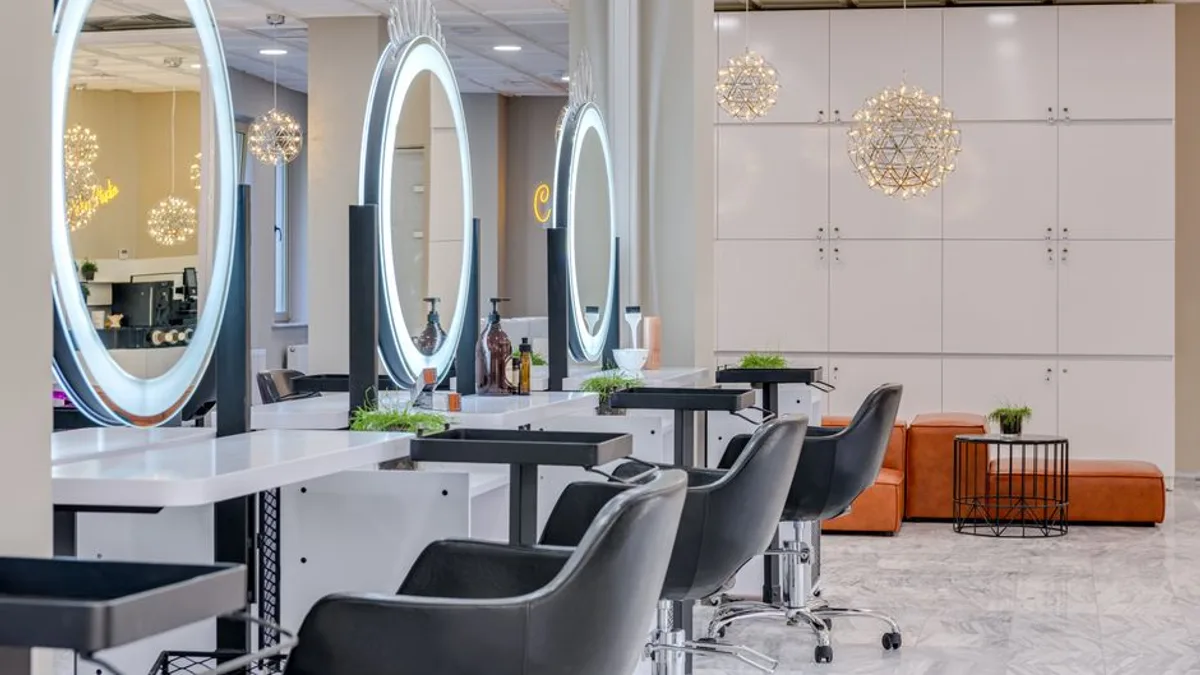
Photo by Max Vakhtbovych on Pexels
Most no-shows aren't a client problem. They're a timing problem. Four reminders, sent at four specific moments, handle most of it: a confirmation at booking, a nudge 2–3 days out, another at 48 hours, and a final text 2–4 hours before the visit. This article breaks down the exact cadence, the research behind it, and how to run it in a solo booth or suite without a front desk or a single manual text.
The Short Answer: Four Touchpoints, Not One
If you want the whole schedule in one place, here it is.
- Email confirmation at the time of booking. Acuity recommends this as the first touchpoint. It acknowledges the appointment and sets expectations immediately: date, time, service, policy.
- A reminder 2–3 days out. This is the window that gives clients room to cancel or reschedule inside your policy, and gives you time to refill the slot.
- A 48-hour reminder and a day-of reminder 2–4 hours before the visit. Curogram describes this as the pattern many practices see best results with.
- Optional: a one-week heads-up for high-value appointments. Some healthcare guides recommend a three-touch cadence of one week, 48–72 hours, and 2–4 hours before, with the final reminder sent by SMS or WhatsApp.
That's it. Four sends, and three of them do different jobs.
The confirmation locks the appointment in the client's head. The 2–3 day reminder protects your policy. The 48-hour and day-of reminders are pure attendance insurance.
Most stylists send one reminder, if that. One reminder means you're relying on a single moment to catch a client who has forgotten, double-booked, or lost the parking instructions. Four touchpoints spread that risk across a week.
Why the 2–3 Day Window Beats a Last-Minute Nudge
The 2–3 day reminder exists for one reason: it gives a client time to cancel or reschedule within your policy limits. That's Acuity's framing, and it's the right way to think about it.
Here's why it matters more than a 24-hour nudge. A cancellation 2 days out is a chance to rebook. A cancellation 2 hours out is a hole in your day. Same cancellation, completely different outcome for your income.
Acuity puts it plainly: the 2–3 day window beats a last-minute 24-hour reminder if your goal is filling the slot. That's not a small distinction. It's the difference between a Tuesday you can rebuild and a Tuesday you eat.
There's research backing the timing too. A review of reminder-systems studies found that sending reminders anywhere between 1 and 7 days before an appointment had no adverse effect on attendance. In other words, earlier doesn't hurt. You're not sacrificing turnout by sending 3 days out instead of 1.
The same review authors made a point that gets overlooked. Reminders should arrive early enough for patients to rearrange their commitments. A reminder that lands after the workday is over doesn't help anyone. If your client can't call their sitter or swap a shift, the reminder is just noise.
That's the whole argument for 2–3 days. It's not about nagging harder. It's about giving people enough runway to actually show up.
Match the Channel to the Lead Time
Not every reminder should arrive the same way. Patient preference data suggests different channels serve different lead times, and the logic holds for salon clients too.
- Letters or postcards, about 1 week ahead. Better for planning and confirming details. Nobody sends postcards anymore, but the principle applies to any long-lead message: it's about details, not urgency.
- Email, in the middle. Email can carry more detail, like directions, prep instructions, and your cancellation policy, without feeling intrusive.
- Text messages, 1–2 days ahead. These function more like a direct reminder. Short, immediate, easy to act on.
- SMS, 2–4 hours before the visit. If you're sending a final reminder this close to the appointment, SMS is the channel that actually gets seen.
So the pattern is: email for detail, SMS for urgency. Your booking confirmation can live in email. Your day-of nudge should be a text.
This matters practically. A client reading an email at 9pm the night before is fine. A client who needs to know you're running 15 minutes late needs a text. Match the message to the moment.
What This Looks Like in a Solo Booth or Suite
You don't have a front desk. Every reminder you don't automate is a text you have to send between clients, usually with foils in your hand and a timer running.
That's the real cost. Not the reminder itself, but the context-switching. Five manual reminders a day is 5 interruptions. Over a week, that's a lot of attention pulled off the person in your chair.
A booking app with built-in email and SMS reminders handles the cadence for you. Chairwarden's Individual plan includes 500 SMS reminders per month, which covers most solo stylists with room to spare. Email reminders are included too, so the confirmation and mid-range touches run themselves.
But reminders only solve half the problem. The other half is calendar protection.
Here's the scenario. You block out 3 hours for a color correction on Saturday. A client books online for a 30-minute trim at 11:15. If your calendar allows that, the 3-hour block is gone. No reminder cadence fixes that, because the block was already broken at the moment of booking.
Prevention does. Chairwarden's strict mode never allows fragmentation. A short booking can't split a long, high-value block, period. Relaxed mode is the middle ground: it allows a short service at the edges of a block when it wouldn't meaningfully fragment it.
If you're still deciding how to structure your blocks in the first place, how to use protected calendar blocks as a stylist walks through the setup. The short version: protection and reminders work together. Reminders get people to show up. Protection keeps the appointment worth showing up for.
The One-Week Reminder: Useful or Noise?
The research found no adverse effect on attendance when reminders went out between 1 and 7 days before the appointment. So a one-week reminder won't hurt your turnout.
The question is whether it helps.
A one-week reminder works best as a planning touch. It gives clients time to arrange childcare, request time off, or reschedule before the week fills up. That's a different job than a reminder. It's a heads-up.
For high-value appointments, it makes sense. Color corrections, extensions, long keratin treatments. Those slots are worth protecting, and a week's notice gives the client every chance to keep the date or move it early enough for you to refill.
For a quick 30-minute trim, a one-week reminder is probably overkill. The 2–3 day window is enough. Adding a week-ahead text to every $45 cut just trains clients to ignore your messages.
So the rule isn't "always send four reminders." It's this: send the standard four, and add the one-week touch only when the appointment is worth the extra protection. A good way to think about it is to match the reminder weight to the appointment value, the same way you'd match your pricing to your service costs.
How to Set This Up Without Adding Work
Setup takes about two minutes. You tell Chairwarden how long a quick service takes and how long a long one takes. That's the input that drives calendar protection.
From there, the tiers are simple.
| Free | Individual | |
|---|---|---|
| Price | $0 | $29/mo or $23/mo billed annually |
| Bookings | Up to 15/month | Unlimited |
| Calendar protection | Included from the first booking | Included |
| SMS reminders | Not included | 500/month |
| Email reminders | Included | Included |
| Public booking page | Included | Included |
| Google Calendar two-way sync | Included | Included |
| Credit card required | No | Yes |
The free tier includes calendar protection from the first booking, which matters. Protection isn't a paid add-on. It's the baseline.
If you're bringing clients over from another system, the import wizard pulls your client list from Vagaro, Square, GlossGenius, or Schedulicity. You get a preview before anything moves, so nothing lands in the wrong place.
The Individual plan covers the full reminder cadence: email confirmation at booking, email for the mid-range touches, and SMS for the 48-hour and day-of sends. If you want to see how this stacks up against managing it all by hand, salon software that respects your time is a good companion read.
What to Do When Clients Still No-Show
No reminder cadence eliminates no-shows. The research shows reminders help. They're not a guarantee.
If a client no-shows after a 2–4 hour SMS reminder, that's a different problem. It's a client problem, not a timing problem. You've done everything the data says to do. The gap is on their end, and the fix is policy, not more reminders.
A few things worth considering:
- Deposits or prepayment for long, high-value appointments. This shifts the cost of a no-show. Check your local rules and your platform's policies first, because requirements vary.
- Track which services and which clients no-show most. Patterns tell you where to tighten your policy, not just your reminders. If one service type accounts for most of your no-shows, that's a signal.
- Tighten your cancellation window. If your policy says 24 hours but your reminder goes out at 48, you're giving clients a grace period they didn't agree to. Line the two up.
The goal isn't zero no-shows. It's a system where the ones that happen cost you as little as possible, because you had 2 days to refill the slot instead of 2 hours.
The Bottom Line
Four touchpoints. A confirmation at booking. A nudge 2–3 days out. A 48-hour reminder. A text 2–4 hours before. Email for detail, SMS for urgency, and a one-week heads-up only when the appointment is worth protecting.
Run that cadence, protect your long blocks from fragmentation, and most of the reminder work disappears into the background. You stop texting between clients. You stop losing 3-hour blocks to 30-minute bookings.
If you want to try it, the free tier needs no credit card and includes calendar protection from the first booking. Fifteen bookings a month is enough to see whether the cadence holds up with your actual clients. If it does, Individual runs $29/mo, or $23/mo billed annually, with 500 SMS reminders included.
Frequently Asked Questions
Is one reminder enough, or do I need multiple?
Multiple touchpoints work better. Start with a confirmation at booking, then a 2–3 day reminder, a 48-hour reminder, and a day-of reminder 2–4 hours before. That's the pattern many practices see best results with.
Should I send reminders by text or email?
Both, but for different reasons. Email works for detail and planning. Text works for the final nudge — 1–2 days ahead or 2–4 hours before the visit. If you're only sending one channel, SMS gets seen faster.
What if my client cancels after the 2–3 day reminder?
That's the point of sending it early. A cancellation 2 days out gives you time to fill the slot. A cancellation 2 hours out doesn't. The 2–3 day window is specifically useful when clients may need time to cancel or reschedule within policy limits.
Does Chairwarden send reminders automatically?
Yes. The Individual plan includes 500 SMS reminders per month, plus email reminders. You set the cadence once, and it runs. The free tier includes calendar protection but not SMS.
On Chairwarden
No-show protection
Deposits through your own Stripe account, and what happens when one is not paid.
Read the full page